Installation Screening, Overnight. P.E.-Stamped, Code-Ready.
Send us your vessel data and a design matrix at 6 PM. By morning you have a parametric go/no-go report — DNV/API/ISO compliant, audit-trail traceable, and ready to defend to your client and the marine warranty surveyor.
Why we wrote this: contractor engineering teams are losing tenders to screening bottlenecks. Three weeks of manual Excel for vessel selection means the bid window closes on partial coverage. We codified two decades of subsea installation engineering practice into parametric tools that run hundreds of cases overnight — so your team can defend vessel choice with data, not tribal knowledge. Founder: linkedin.com/in/vamseeachanta.
What we do for vessel contractors
Installation-engineering screening
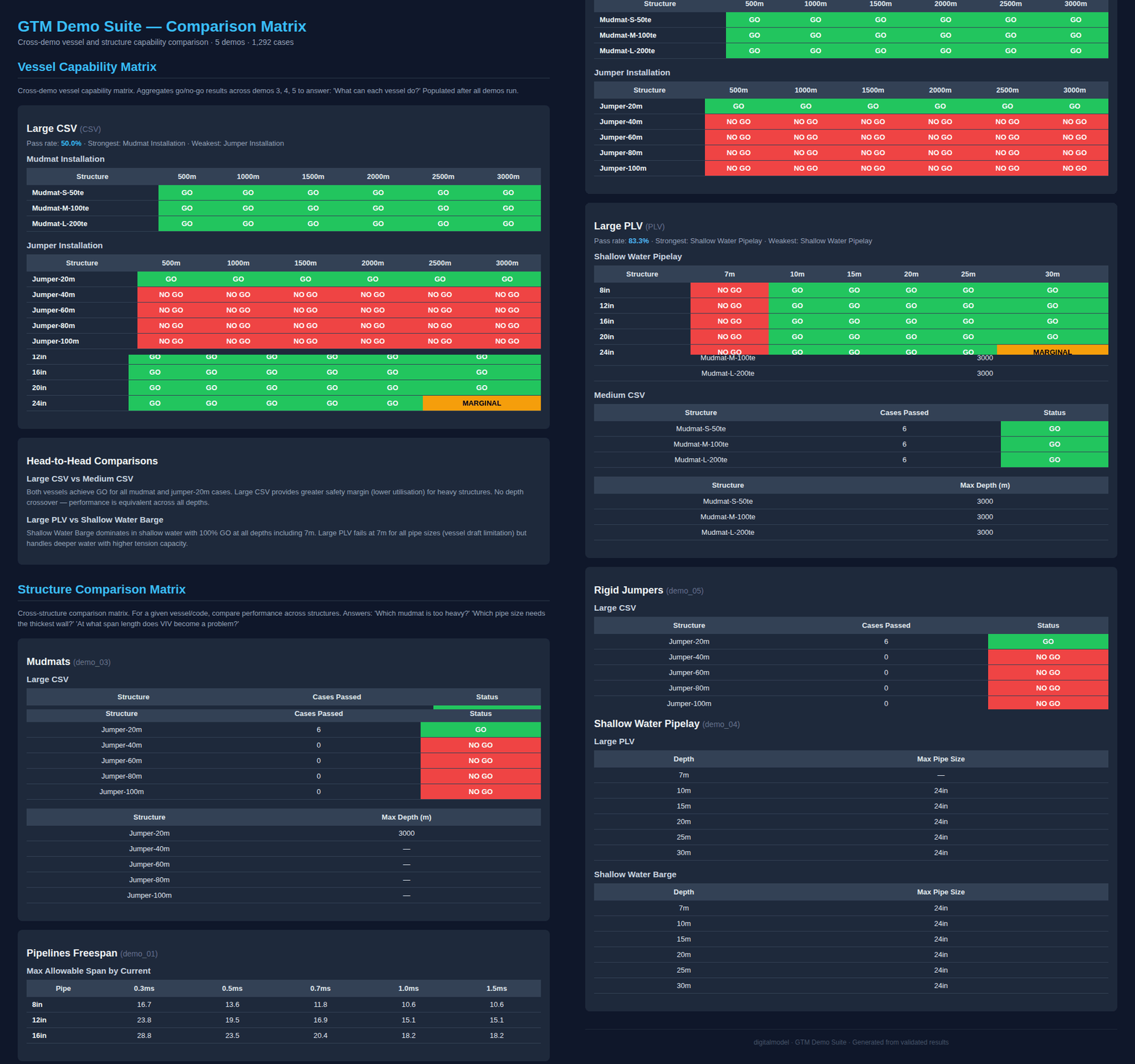
Vessel-structure-seastate matrices run overnight. Heavy-lift to splash-zone slamming, jumper VIV to mudmat lowering. Go/no-go heatmaps with the governing load case identified per cell — DNV-RP-H103, DNV-ST-N001, API RP 2A.
Operability-envelope analysis
Weather windows, RAO-driven operability, and seastate-limited execution logic for tow-out, hook-up, S-lay, and PLSV operations. Identifies where your real operating envelope is wider — or narrower — than the standard rule of thumb.
Contractor-specific tooling
Your vessels, your structures, your metocean — not generic examples. We benchmark against your in-house tools first. Re-runs at marginal cost when inputs change. Outputs match the format your engineering manager already presents to clients.
Niches we serve
- Subsea jumper and spool installation (lift loads, VIV, orientation sensitivity)
- Pipeline freespan and VIV screening (allowable span maps, soil sensitivity)
- Mudmat and PLET installation (deepwater, splash-zone slamming)
- S-lay pipelay and tensioner screening (catenary, sagbend, overbend)
- Deepwater mooring concept screening (catenary vs. taut, anchor strategy)
- FOWT mooring transfer from O&G (RAFT + MoorPy screening, tow-out)
- LNG berth operability and FSRU transfer-interface screening
- Multi-code wall-thickness comparison (DNV-ST-F101, API RP 1111, PD 8010-2)
How a 48-hour custom run works
Send three things — vessel name or class, structure type and weight range, water-depth range. We pull or use your RAO data, configure the parametric sweep against your project metocean, and return a full screening report 48 hours later: heatmaps, governing load case per scenario, and seastate operability limits in the same format as our published demos. Screening engagements run $5K–$15K. If feasibility checks out, detailed engineering follows at $25K–$75K.